
PROGRAMMABLE SUB-THz FABRIC
Contactless compute infrastructure
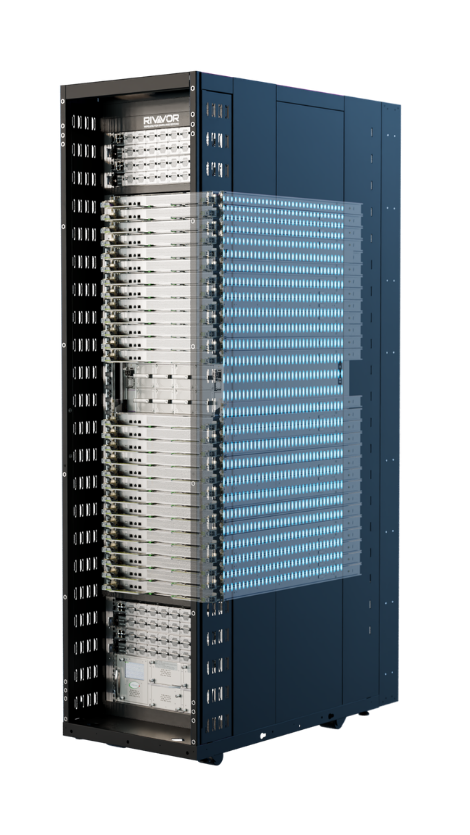
A programmable THz fabric that turns the structure itself into the network. RIVVOR connects modules within compute pods and supports engineered paths between pods or racks, with no mechanically mated high-speed data interfaces on the selected paths.
- High bandwidth
- Low latency
- Flexible physical topology
- Faster buildout
- Simpler service
RIVVOR FOUNDATION
One fabric. Built to fit the system.
RIVVOR Fabric is a contactless physical connectivity layer for modular compute, sized to each enclosure, endpoint count, bandwidth and topology.
What's in it
Module interfaces
On compute and switch modules.
Physical transport
Guided EM corridors or directional sub-THz links.
Fabric controller
Coordinates paths across the system.
Software
Establishes and manages physical paths.
How it scales
Compact pod
Connect a few blades.
High-density AI rack
Support a fully populated rack.
Between pods or racks
Extend selected, engineered paths.
How it's delivered
Integrated into your hardware
We design the fabric into your enclosure and modules.
Complete modular compute system
A ready system with the fabric built in.

Modular future
PURPOSE
Compute should be built to change.
A blade should be replaceable without tracing cables through a rack, disturbing neighboring hardware, or mating a dense field of high-speed connectors.
01 Faster buildout
02 Simpler service
03 Flexible topology
04 Lower lifecycle cost

THE CHALLENGE
Physical connections are becoming the constraint.
AI systems demand more bandwidth within a fixed physical envelope. Cables, connectors, transceivers and service clearances compete with compute, power and cooling. As link counts rise, so does the work required to route, inspect, troubleshoot and replace physical connections.
System builders need high aggregate bandwidth and low latency, along with faster deployment, accessible hardware and less hands-on work over the system's lifetime.
OUR APPROACH
Make physical connectivity programmable.
RIVVOR separates mechanical attachment from the high-speed data path. Modules remain securely mounted while data connections are established through controlled electromagnetic interfaces.
BUILT FOR MODERN SYSTEMS
One architecture. Different environments.
Data centers
-
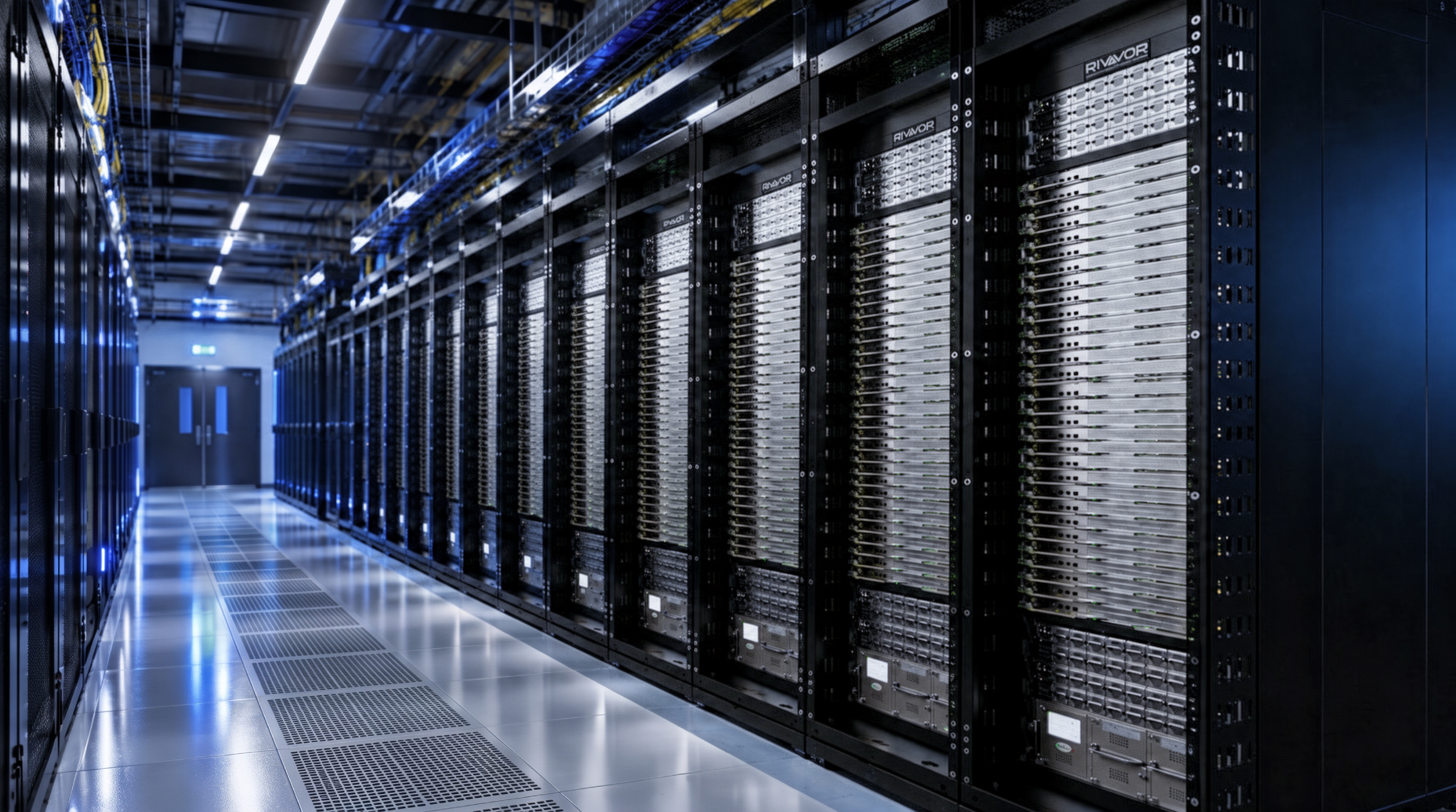
High-bandwidth, low-latency paths within compute pods and selected connections between pods or racks.
-
Configure for a few blades, a populated rack or multiple pods. Expand and replace modules without rebuilding cable connections.

Space & lunar
-
Modular systems with fewer internal high-speed cable harnesses and connector-dependent service operations.
-
Replaceable compute and remotely monitored links where physical access is limited and every intervention matters.

Robotics & industrial
-
Contactless data interfaces for serviceable processors, accelerators and controllers in physical AI systems.
-
Less connector mating and reseating in equipment exposed to vibration or repeated module replacement.

Defense & edge
-
Compact modular compute for faster assembly and field service, with fewer high-speed connections to restore.
-
Replace equipped modules while the fabric detects, establishes and monitors their links.
WHY NOW
Sub-THz technology is meeting a physical compute problem.
Advances in sub-THz electronics, packaging and directional antenna systems make high-capacity links possible at the scale of compute modules and rack structures. Meanwhile, AI infrastructure is becoming denser, more expensive to build and more difficult to service.
RIVVOR brings the link, the structure and software control together. Our roadmap targets terabit-class aggregate capacity, low-latency connectivity, faster system buildout and lower lifecycle cost. Link-health monitoring and physical-path management also lay the groundwork for increasingly autonomous service.
JOIN THE MISSION
Build the next generation of modular compute.
RIVVOR works across sub-THz RF, electromagnetic structures, hardware integration and software control. We welcome conversations with system builders, pilot partners and engineers who want to make compute faster to deploy and easier to maintain.